From Skills Gaps to Heat Pump Deployment: What Works in Practice
September 15, 2026From Skills Gaps to Heat Pump Deployment: Highlights from the 2nd SKILLS4HP Cluster Webinar
October 19, 2026
When people talk about Europe’s clean energy transition, one common worry is dependence on imported technology. New data from the European Heat Pump Association (EHPA) suggests that for heat pumps, the picture is far more reassuring than many assume.
What the data shows
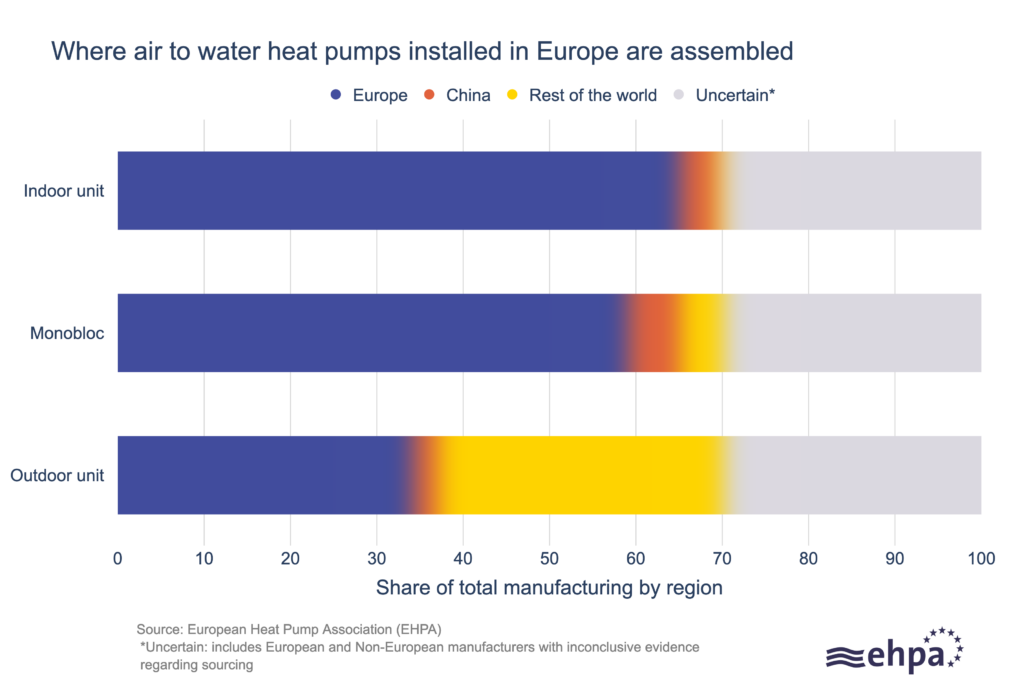
EHPA asked its members where the air-to-water heat pumps they sell in Europe are assembled. The responses cover around 70% of the market by number of units sold. The results show that:
- The vast majority of air-to-water heat pumps installed in Europe are assembled in Europe, while only around 10% are assembled in China.
- Monobloc units are 80-90% European-assembled, against 5-10% from China.
- Indoor units are 90-100% European-assembled, against 5-10% from China. These units are the highest value-added part of the heat pump supply chain.
- Outdoor units are more mixed: around 40-50% are assembled in Europe, under 5% in China, and the remaining 40-50% elsewhere.
Room to grow
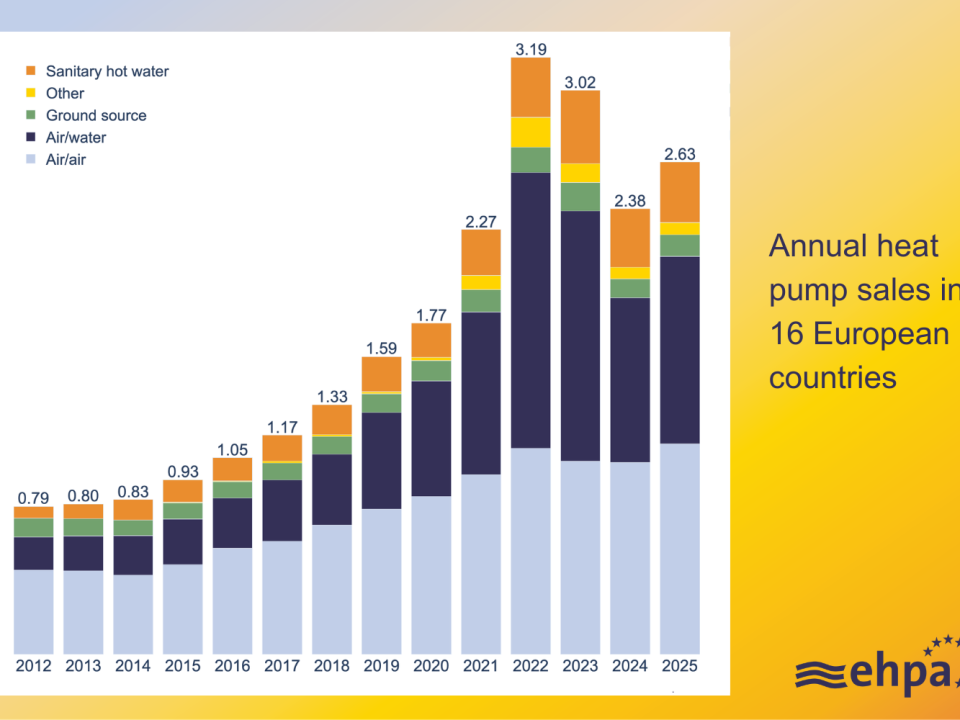
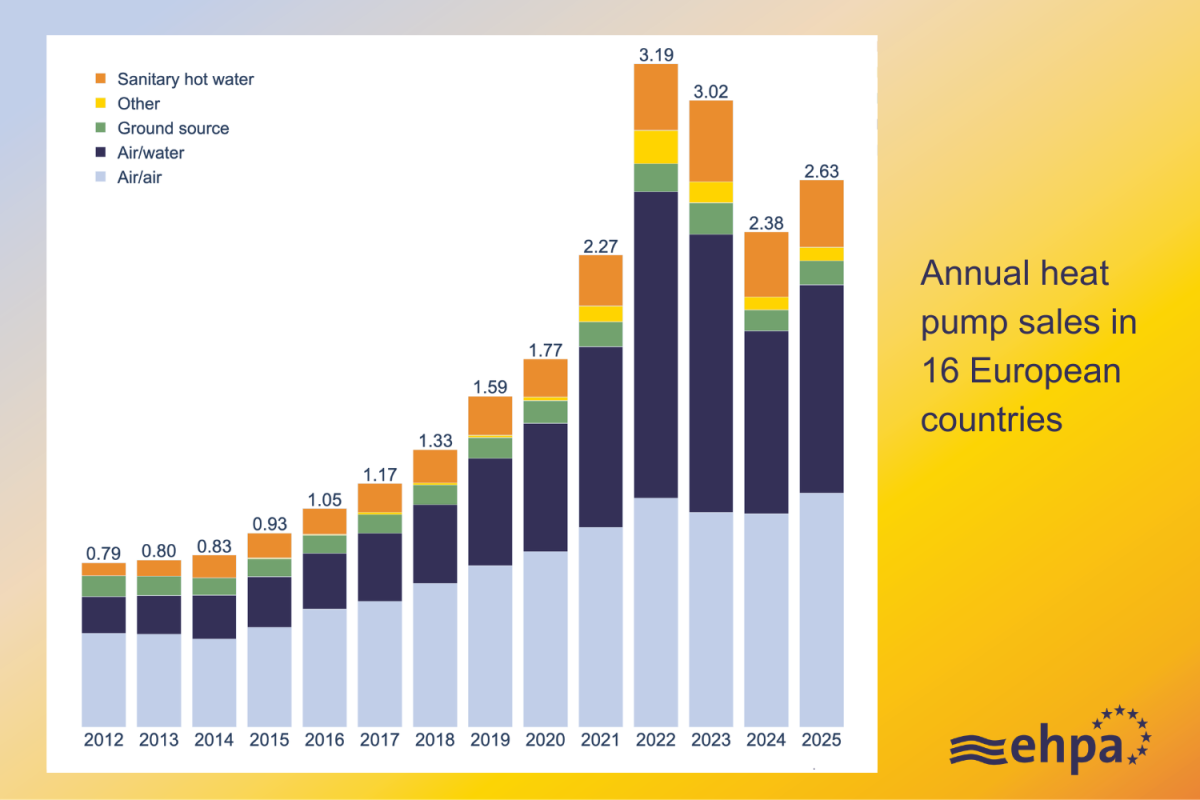
According to EHPA, Europe’s roughly 300 heat pump factories could produce over three times more units than they do today. Production capacity is estimated at around 8 million heat pumps a year, compared with about 2.5 million currently. The limiting factor is not manufacturing but demand.
EHPA links demand to electricity pricing and consumer support. It argues that lower taxes on electricity and clear, stable incentives for households are key to unlocking that capacity. Its latest sales figures show heat pump sales across 16 countries grew by 11% in 2025, which EHPA attributes to governments beginning to act on these issues.
The policy context
In March 2026, the European Commission proposed the Industrial Accelerator Act, which aims to strengthen clean-tech manufacturing in Europe. As proposed, hydronic heat pumps would have to originate in the EU three years after the Act enters into force. The proposal is still to be discussed, and potentially amended, by the Member States and the European Parliament.
Why it matters for Re-Energize
A strong European manufacturing base is only one part of the picture. For heat pumps to reach homes and buildings at scale, Europe also needs enough skilled professionals to design, install and maintain them. Growing capacity on the production side makes that skills gap more important to close, and this is where the Re-Energize project focuses its work.
Note: the figures come from an industry association’s member survey covering about 70% of the air-to-water market, so they should be read as a strong indication rather than a full market census.
Sources